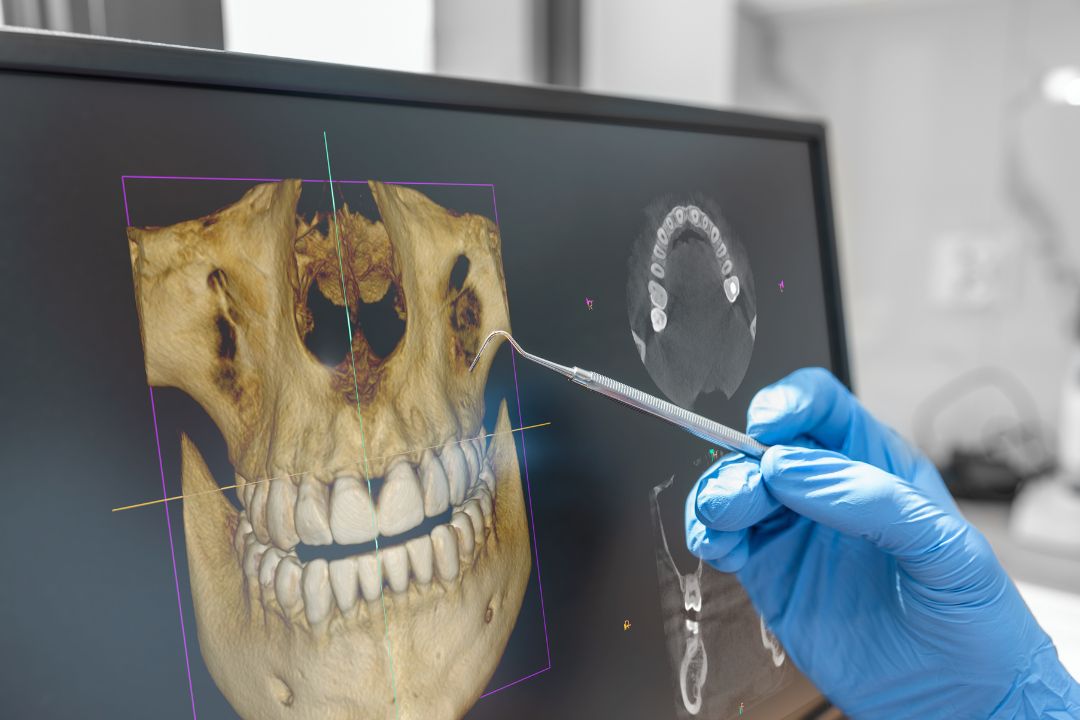
Dentistry has come a long way in recent years, thanks to advancements in technology that make treatments more accurate, less invasive, and more comfortable for patients. One of the most significant innovations in the field is 3D imaging, which has revolutionized how dentists diagnose and treat a variety of dental issues. In this article, we’ll explore how 3D imaging enhances dental care and treatment, from improving diagnostics to helping dentists perform more precise procedures.
What is 3D Dental Imaging?
3D dental imaging refers to the use of advanced imaging techniques, like cone beam computed tomography (CBCT), to create detailed, three-dimensional images of a patient’s teeth, gums, and surrounding structures. Unlike traditional two-dimensional X-rays, 3D imaging provides a comprehensive view of the mouth from all angles, allowing dentists to get a clearer picture of what’s going on inside.
This technology enables more accurate diagnostics and better treatment planning, especially for complex cases that involve root canals, dental implants, or orthodontic work.
The Importance of 3D Imaging in Modern Dentistry
Enhancing Diagnosis Accuracy
Traditional dental X-rays, while useful, only offer limited information. They show flat, two-dimensional images that don’t always capture the full extent of a dental issue. One of the most significant ways 3D imaging enhances dental care and treatment, particularly at Paramus Park Oral Surgery, is by providing a complete, detailed view of the patient’s mouth. Dentists can now examine every angle of the tooth, bone, and tissue structures, ensuring nothing is overlooked.
For instance, if a patient is experiencing tooth pain but the cause isn’t immediately clear, 3D imaging can reveal hidden issues, such as fractures, impacted teeth, or bone abnormalities that might not be visible on a standard X-ray.
Early Detection of Dental Problems
Because 3D imaging allows dentists to see more detail, it can be a game-changer for early detection of dental problems. Dentists can spot potential issues before they become severe, such as early-stage decay, infections, or structural damage. Catching these problems early often means less invasive treatments and a better prognosis for the patient.
How 3D Imaging Enhances Dental Care and Treatment
1. Improved Treatment Planning
One of the most significant benefits of 3D imaging in dentistry is its ability to assist with precise treatment planning. This is especially valuable for more complex procedures, such as dental implants or orthodontic work. For example, when planning for a dental implant, the dentist needs to ensure there is enough bone to support the implant, and 3D imaging provides a clear view of the bone structure.
With 3D imaging, dentists can map out the exact location and angle of the implant before the procedure begins. This level of accuracy improves the likelihood of a successful outcome and reduces the risk of complications.
2. Better Root Canal Treatments
Root canal treatments can be tricky because the dentist needs to clean out the infected tissue from inside the tooth’s root canals. These canals can be narrow, curved, or difficult to access, making the procedure challenging. However, 3D imaging enhances dental care and treatment by providing a clear map of the root canals before the procedure begins.
This technology allows the dentist to see the exact shape and depth of the canals, making the procedure more precise and reducing the risk of leaving any infected tissue behind. As a result, patients experience less discomfort, and the chances of successful treatment are higher.
3. Precision in Orthodontic Treatment
Orthodontic treatments, such as braces or clear aligners, require careful planning to ensure the teeth move into the correct positions over time. 3D imaging helps orthodontists create highly accurate treatment plans by showing the position of each tooth in relation to the jawbone and other teeth. This ensures the treatment is tailored to the patient’s unique dental structure, leading to better results and shorter treatment times.
4. Better Outcomes for Dental Implants
Dental implants are a popular solution for replacing missing teeth, but the procedure requires careful preparation and precision. 3D imaging enhances dental care and treatment by allowing the dentist to see the full structure of the jawbone and determine the best placement for the implant.
With this information, dentists can avoid vital structures like nerves and blood vessels, which reduces the risk of complications. The result is a more accurate, safer procedure with better long-term outcomes for the patient.
5. Enhancing TMJ Disorder Treatment
Temporomandibular joint (TMJ) disorders affect the joints that connect the jaw to the skull and can cause pain, clicking, and difficulty chewing. Diagnosing TMJ disorders can be challenging because the joint is located deep in the jaw and not easily visible on standard X-rays. However, 3D imaging provides a detailed view of the joint and surrounding tissues, helping dentists diagnose TMJ disorders more accurately.
This allows for more effective treatment, whether it involves physical therapy, splints, or surgery, based on the specific cause of the disorder.
The Benefits of 3D Imaging for Patients
Less Invasive Procedures
Because 3D imaging allows dentists to plan treatments with greater accuracy, patients often benefit from less invasive procedures. For example, when placing dental implants, the dentist can use the 3D images to avoid unnecessary incisions or drilling, resulting in a quicker recovery and less discomfort for the patient.
Shorter Treatment Times
With a clearer understanding of the problem and a more precise treatment plan, many dental procedures can be completed more efficiently. This means patients spend less time in the dental chair and often require fewer follow-up visits.
Improved Patient Comfort
3D imaging isn’t just beneficial for the dentist—it also improves the patient’s experience. Traditional X-rays often require uncomfortable positioning, while 3D scans are quick and painless. Plus, by reducing the need for exploratory procedures or unnecessary treatments, 3D imaging helps patients feel more comfortable and confident about their care.
How Safe is 3D Imaging in Dentistry?
One question many patients have is whether 3D imaging is safe. The answer is yes! While 3D imaging does involve a small amount of radiation exposure, it’s minimal compared to traditional X-rays. Dental offices follow strict safety guidelines to ensure that radiation exposure is kept as low as possible. The benefits of 3D imaging in terms of improved diagnostics and treatment outcomes far outweigh the risks, making it a safe and valuable tool in modern dentistry.
Conclusion
There’s no doubt that 3D imaging has transformed the way dentists diagnose and treat dental issues. From improving the accuracy of root canals to making dental implants more successful, this technology offers numerous benefits for both dentists and patients. By providing a detailed view of the mouth’s structures, 3D imaging enhances dental care and treatment, allowing for better outcomes, shorter treatment times, and improved patient comfort. As dental technology continues to evolve, 3D imaging will likely remain a cornerstone of modern dentistry, helping patients achieve healthier, more confident smiles.
 Daily Vibes