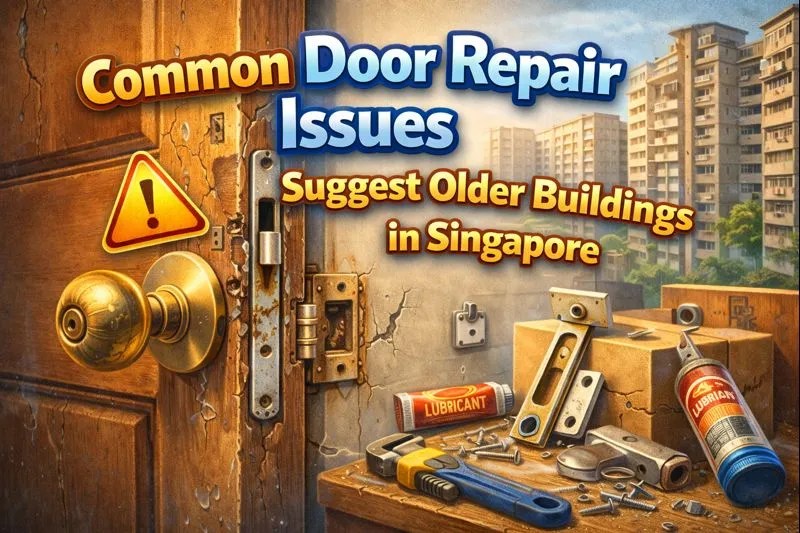
Older buildings show clear signs through daily use. Doors often give the first signal. Many residents notice doors that stick, sag, or fail to lock with ease. These door repair issues appear more often in buildings built decades ago. Age affects materials, structure, and alignment. Climate also plays a role. Heat and moisture place stress on wood, metal, and hardware. This article explains how door repair issues point to older buildings in Singapore. It also explains how door locks and lock issues connect to building age.
Aging Building Materials and Door Wear
Older buildings use materials that differ from modern standards. Many doors in older flats use solid wood or early metal frames. These materials change with time. Wood absorbs moisture and expands. Metal frames can bend or rust. Hinges loosen as screws lose grip. These changes cause doors to drag on the floor or scrape the frame. Door repair issues often start with these small changes.
In older buildings, maintenance often follows a reactive pattern. Owners fix doors only after failure. This approach allows wear to spread. A misaligned door places pressure on hinges and locks. Over time, the door no longer fits its frame. This creates gaps or tight spots. These signs often suggest the building structure has shifted with age.
Structural Movement and Door Alignment Problems
Buildings settle over time. Concrete shrinks. Foundations adjust under load. These movements affect door frames. A frame that once stood square may now tilt. Even a small shift affects how a door closes. Residents may push or pull harder to shut the door. This action strains hinges and door locks.
Door repair issues linked to alignment often appear as uneven gaps. The top corner may touch first. The latch may miss the strike plate. These problems appear more in older buildings where structural movement has occurred. Newer buildings use methods that limit this movement, but older structures lack these updates.
Humidity Effects on Doors in Older Properties
Singapore has high humidity year-round, which places constant stress on doors and locking systems. Older doors often lack the protective coatings and sealants used in modern construction. Moisture seeps into wood fibers and causes swelling, which makes doors stick inside the frame. When this happens, residents may sand the edges or force the door shut, but repeated pressure increases strain on hinges and locking points. Over time, this wear can affect door alignment and create lock-related issues that often require attention from a Locksmith Singapore property owners trust for humidity-related door problems.
Metal doors face a different set of risks in the same climate. Moist air encourages rust to form on hinges, internal lock parts, and keyways. Rust increases friction, which makes door locks harder to turn and causes keys to jam or snap inside the lock. When lock resistance develops alongside visible corrosion, it often signals years of moisture exposure without proper sealing. These conditions commonly indicate an older building with limited moisture control and aging door hardware.
Worn Hinges and Their Impact on Door Function
Hinges support the full weight of a door. In older buildings, hinges often show fatigue. Screws loosen as wood fibers wear out. The hinge plate may bend. This causes the door to sag. A sagging door scrapes the floor and strains the latch.
Door repair issues linked to hinges often appear before lock failure. A misaligned door forces the latch to hit the strike plate at an angle. This pressure damages door locks over time. Lock issues then follow as a secondary problem. In many older buildings, hinge wear explains repeated lock repairs.
Outdated Door Locks in Older Buildings
Older buildings often keep original door locks. These locks use older designs with fewer security features. Internal parts wear down with repeated use. Springs weaken. Pins wear unevenly. Keys lose sharp edges. These changes cause lock issues such as sticking or failure to turn.
Modern locks use improved materials and tolerances. Older locks lack these features. As a result, door repair issues related to locks appear more often in aging properties. Residents may need to jiggle keys or apply force. These actions increase wear and raise the risk of lock failure.
Frame Damage and Lock Misalignment
Door frames in older buildings may crack or split. Wood frames dry out and lose strength. Metal frames corrode at joints. These changes affect the lock area. The strike plate may shift. Screws may no longer hold.
Lock issues often result from this frame damage. The latch may fail to engage fully. The door may appear locked but open with pressure. This problem poses safety risks. It also signals that the building has aged beyond its original tolerances.
Repeated Repairs as a Sign of Building Age
Frequent repairs often point to deeper issues. In older buildings, door repair issues return after short periods. A technician may adjust the door, but the fix does not last. The underlying cause often lies in the frame or structure.
Repeated lock issues also follow this pattern. A new lock may fail if the door alignment remains poor. These cycles suggest that the building needs more than surface fixes. They indicate age-related changes that affect door systems as a whole.
Differences Between Older and Newer Building Standards
Building standards have changed. Older buildings follow codes from past decades. Door sizes, frame supports, and lock placements differ from modern designs. These differences affect repair outcomes. Modern replacement parts may not fit well.
Door repair issues arise when parts do not match the original design. Installers may modify frames or hardware. These changes can weaken the door system. Lock issues may increase due to poor fit. These challenges often appear in older properties.
Noise, Drafts, and Gaps Around Doors
Gaps around doors signal wear and movement. Older buildings often show visible gaps. Air flows through these spaces. Noise passes easily. These gaps also affect locks. The door may not press firmly against the frame. The latch may sit loosely.
Door repair issues related to gaps often include loose locks and rattling doors. These signs suggest that the door and frame no longer align as designed. This condition often links to building age and long-term movement.
Security Concerns in Aging Door Systems
Security depends on door strength and lock function. Older buildings may not support modern security needs. Doors may feel light or flexible. Frames may lack reinforcement. Lock issues reduce resistance to force.
Residents may add extra locks or bars. These additions can strain the door. New holes weaken the structure. Door repair issues then increase. This pattern often appears in older buildings where original security features no longer meet current needs.
Maintenance History and Its Role in Door Problems
Maintenance history affects door condition. Older buildings often have uneven maintenance records. Some units receive regular care. Others do not. Doors in poorly maintained units show more damage.
Lock issues appear sooner without lubrication and adjustment. Hinges rust. Screws loosen. Door repair issues then spread from small faults to full failure. These outcomes reflect both age and maintenance gaps.
How Technicians Identify Age Through Door Issues
Experienced technicians read signs quickly. They note hinge wear, frame movement, and lock condition. They assess how the door sits in the frame. These observations help them estimate building age.
Door repair issues tell a story. A sagging door with worn locks often points to decades of use. Lock issues that repeat after replacement suggest structural factors. These patterns help technicians advise on long-term solutions.
Upgrading Doors in Older Buildings
Upgrades can reduce problems. Reinforced frames support better alignment. Modern hinges handle weight more evenly. Updated door locks improve function and security. These changes address age-related weaknesses.
However, upgrades require careful planning. Older structures need compatible solutions. Poor upgrades can create new door repair issues. Proper assessment ensures that new parts work with existing frames.
Preventive Steps for Residents
Residents can take simple steps. They can avoid forcing doors. They can report early signs of sticking or noise. They can keep locks clean and lubricated. These actions slow wear.
Early attention reduces major door repair issues. It also limits lock issues caused by misalignment. While age cannot change, care can extend door life in older buildings.
Conclusion
Doors reflect building age through daily function. In Singapore, climate and time affect doors in clear ways. Door repair issues such as sagging, sticking, and gaps often signal older structures. Door locks and lock issues add further clues through wear and misalignment.
Understanding these signs helps residents and owners act early. Clear awareness supports safer, smoother door use. With proper care and informed upgrades, older buildings can maintain reliable doors despite their age.
 Daily Vibes