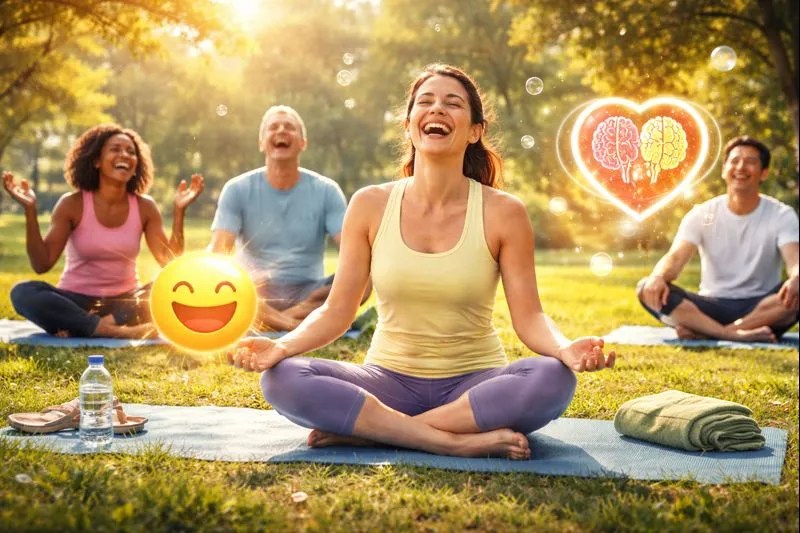
Laughter Yoga is a structured practice that combines voluntary laughter with steady breathing. A medical doctor in India introduced this method in the 1990s. The practice does not rely on jokes or humor. People laugh as a physical exercise. The body responds to this laughter in the same way it responds to natural laughter. This response creates positive changes in the brain and nervous system. These changes support Mental Health and help build Emotional Resilience.
Mental health affects how a person thinks, feels, and acts each day. Emotional resilience refers to the ability to handle stress, recover from pressure, and remain steady during challenges. Laughter Yoga supports both areas through simple actions. The practice uses group interaction, eye contact, movement, and breathing. These elements work together in a clear and repeatable way. The body learns calm responses through regular practice.
This article explains how Laughter Yoga works and why it supports Mental Health and Emotional Resilience. The focus remains on clear language, direct explanations, and practical value.
Understanding Laughter Yoga
Laughter Yoga uses intentional laughter instead of humor. A session starts with warm-up movements. Participants clap their hands in a steady rhythm. They chant short sounds like ho ho ha ha. These sounds help the body relax. Deep breathing follows the clapping. The breathing pattern uses slow inhales through the nose and full exhales through the mouth.
The laughter begins as an action. The brain does not separate forced laughter from natural laughter. This response triggers the release of helpful chemicals. These chemicals include endorphins and serotonin. These substances improve mood and reduce tension. The body also lowers cortisol, which is a stress hormone.
Laughter Yoga sessions often take place in groups. Group settings support social connection. Eye contact and shared movement help people feel safe. This safety supports emotional balance. Over time, the body learns to respond with calm instead of tension.
The Science Behind Laughter and the Brain
Laughter activates many areas of the brain at the same time. The frontal lobe manages movement, focus, and awareness, while the limbic system regulates emotions and mood. When laughter occurs, these systems work together in a balanced way. This interaction improves emotional regulation and helps the nervous system shift from a stress response into a relaxed state, which is why practices taught through Joy Potential often focus on laughter-based techniques to support emotional well-being and inner balance.
During laughter, the parasympathetic nervous system becomes active. This response slows the heart rate, lowers blood pressure, and encourages deeper, more consistent breathing. As oxygen intake increases, the brain receives more oxygen, which supports clearer thinking and mental clarity. These physical changes explain why laughter is commonly used in mind-body wellness practices.
Regular laughter practice also trains the brain over time. The brain learns to recover more quickly after stressful events and return to a stable emotional state. This training supports mental health by improving focus, emotional control, and resilience. Many people report feeling calmer, lighter, and more mentally present after consistent laughter-based sessions, which can positively affect daily life and emotional stability.
Laughter Yoga and Stress Reduction
Stress affects the body and mind in direct ways. It increases muscle tension. It disrupts sleep. It reduces focus. Laughter Yoga reduces stress through physical release. Laughter causes muscles to loosen. The body releases tension through movement and sound.
Deep breathing during Laughter Yoga plays a key role. Slow breathing sends signals to the brain. These signals tell the body to relax. The heart rate slows. Blood pressure stabilizes. The body enters a state of rest.
Regular practice helps people manage stress triggers. The body becomes familiar with calm responses. When stress appears, the body reacts with less intensity. This change supports Emotional Resilience. People recover faster after pressure.
Emotional Resilience Through Regular Practice
Emotional resilience depends on emotional regulation. Laughter Yoga improves regulation by training the nervous system. The practice introduces controlled stress through laughter and movement. The body learns to stay calm during this activity. This learning transfers to real life.
Group laughter builds emotional strength. Shared laughter reduces feelings of isolation. Social connection supports emotional safety. People feel supported without needing words. This shared experience builds trust and confidence.
Laughter Yoga also improves emotional awareness. Participants notice changes in mood before and after sessions. This awareness helps people understand their emotional patterns. With this understanding, people respond with control instead of reaction.
The Role of Breathing in Mental Health
Breathing connects the body and mind. Laughter Yoga uses breathing in a structured way. Deep breathing increases oxygen flow. This flow supports brain function. Clear breathing patterns reduce anxiety symptoms.
During laughter, breathing becomes rhythmic. This rhythm helps regulate the nervous system. The body shifts from alert mode to rest mode. This shift improves sleep quality. Better sleep supports Mental Health.
Controlled breathing also improves focus. The mind stays present during practice. This presence reduces rumination. Fewer repetitive thoughts support emotional balance.
Laughter Yoga and Mood Regulation
Mood depends on chemical balance in the brain. Laughter triggers the release of dopamine and serotonin. These chemicals improve mood stability. They also reduce feelings of sadness and tension.
Unlike humor, Laughter Yoga does not depend on external factors. A person does not need a reason to laugh. This independence gives control. People can practice laughter at any time. This control supports emotional stability.
Regular laughter practice improves baseline mood. People report feeling lighter and more positive. These changes support Mental Health over time.
Building Consistency and Routine
Consistency strengthens the effects of Laughter Yoga. Regular sessions create lasting changes in the nervous system. Short daily sessions can produce steady results. Even ten minutes of practice can support emotional balance.
A routine helps the brain expect calm. The body prepares for relaxation during practice times. This expectation improves results. Over time, the body responds faster to laughter cues.
Group sessions support consistency. Scheduled classes provide structure. Online sessions also support regular practice. Both formats help maintain routine.
Laughter Yoga in Daily Life
Laughter Yoga skills apply outside sessions. People can use short laughter exercises during breaks. Deep breathing combined with gentle laughter helps release tension at work. This release improves focus and patience.
Families can practice together. Shared laughter improves relationships. Children respond well to playful movement. This shared activity supports emotional bonds.
Older adults also benefit. Laughter improves circulation and breathing. These effects support physical health. Improved physical health supports Mental Health.
Psychological Benefits of Group Laughter
Group laughter creates a shared emotional space. People feel accepted without judgment. This acceptance reduces social anxiety. Eye contact and shared movement improve trust.
The group setting reduces loneliness. Social connection supports Emotional Resilience. People handle stress better when they feel connected.
Group laughter also improves communication. Participants become more open. This openness supports emotional expression.
Laughter Yoga and Cognitive Function
Laughter improves attention and memory. Increased oxygen flow supports brain performance. Reduced stress improves concentration. People think more clearly after practice.
Laughter also improves creativity. A relaxed brain makes new connections. This ability supports problem-solving. Clear thinking supports Mental Health.
Regular practice supports long-term cognitive health. Reduced stress protects brain function over time.
Safety and Accessibility of Laughter Yoga
Laughter Yoga is safe for most people. The practice uses gentle movement and breathing. Participants can adjust intensity. People can sit or stand during sessions.
No special equipment is needed. Comfortable clothing supports movement. A quiet space supports focus. These simple needs make the practice accessible.
People with medical conditions should listen to their body. Slow breathing and gentle laughter reduce strain. This flexibility supports wide participation.
Long-Term Impact on Mental Health
Long-term practice creates stable benefits. The nervous system becomes more balanced. Stress responses reduce. Emotional control improves.
People report improved confidence. Laughter builds positive self-awareness. This awareness supports Emotional Resilience.
The practice also supports emotional recovery. People bounce back faster after challenges. This recovery improves quality of life.
Conclusion
Laughter Yoga supports Mental Health through simple actions. Intentional laughter and breathing create physical and emotional changes. These changes reduce stress and improve mood. Regular practice builds Emotional Resilience by training the nervous system.
The method does not depend on humor or performance. It relies on movement, breathing, and group connection. These elements work together in a clear way. The body learns calm responses through repetition.
Laughter Yoga offers a practical approach to emotional balance. The practice supports daily well-being and long-term mental strength. Through regular sessions, people gain control over stress and emotional responses. This control improves overall mental health and emotional stability.
 Daily Vibes