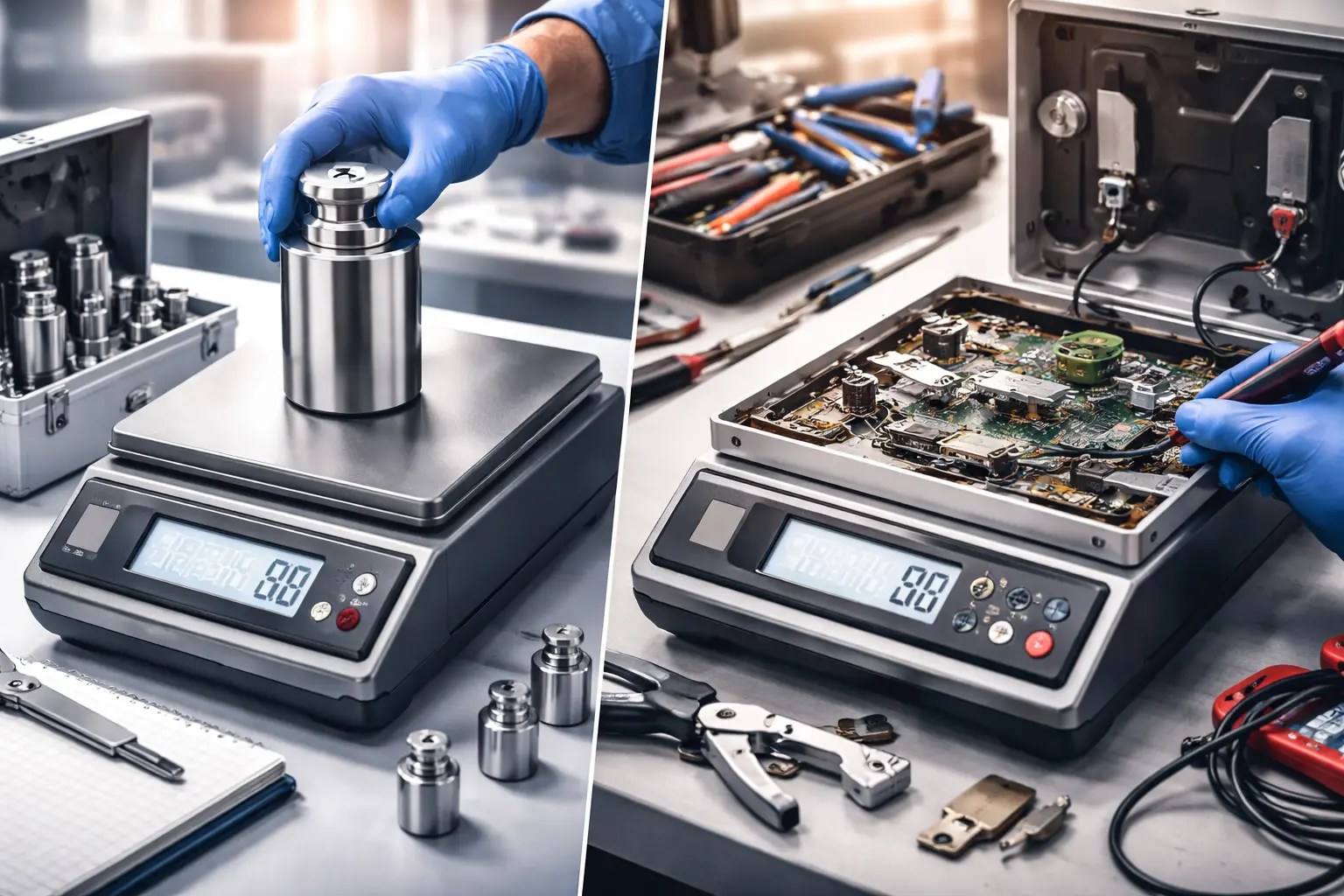
Scale accuracy plays a key role in many industries. Businesses use scales for trade, production, and quality checks. A small error in weight can cause loss or legal issues. Scale calibration and scale repair both support accuracy, but they serve different purposes. This article explains the difference between scale calibration and scale repair in clear terms. It uses simple language and direct structure for easy understanding.
What Is Scale Calibration
Scale calibration is the process of checking and adjusting a scale to ensure correct measurement. A technician compares the scale reading with a known standard weight. If the reading shows an error, the technician adjusts the scale.
Calibration does not fix broken parts. It only ensures that the scale gives the correct weight. The process follows set standards and procedures. Many industries require regular scale calibration to meet legal and quality rules.
Purpose of Scale Calibration
Scale calibration ensures accuracy. It helps businesses maintain trust with customers. It also supports compliance with regulations. Accurate scales reduce the risk of incorrect pricing and product issues.
Calibration also helps track performance over time. A record of calibration shows whether the scale stays stable or needs attention.
How Scale Calibration Works
A technician places certified weights on the scale. The technician checks the reading at different points. If the reading differs from the known weight, the technician adjusts the scale settings.
The technician repeats the process until the scale shows correct values. The technician then records the results. This record may include date, results, and next due date.
Types of Calibration
There are different types of scale calibration based on need:
- Internal calibration uses built-in weights inside the scale.
- External calibration uses separate certified weights.
- Linear calibration checks multiple points across the scale range.
Each type serves a specific purpose based on the scale type and use.
What Is Scale Repair
Scale repair is the process of fixing faults in a scale. A technician identifies damaged or worn parts and replaces or repairs them. Scale repair restores the scale to working condition.
Repair addresses physical or technical issues. These issues may include sensor damage, display faults, or power problems. A scale may stop working or show unstable readings when it needs repair.
Purpose of Scale Repair
Scale repair ensures that the scale functions correctly by identifying and fixing issues that impact accuracy and performance. It removes internal faults, restores proper calibration alignment, and improves overall efficiency. Timely maintenance through a reliable Scale Repair Service not only enhances measurement precision but also reduces the risk of unexpected breakdowns. Repairing minor issues early helps extend the lifespan of the equipment and prevents costly replacements in the future.
A faulty scale can lead to incorrect readings, operational delays, or even complete system failure. Proper repair restores normal functionality, ensuring consistent and dependable results across daily operations.
Common Scale Problems
Several issues may require scale repair:
- Load cell damage
- Display errors
- Power supply failure
- Wiring issues
- Unstable readings
- Physical damage to platform
Each issue affects scale performance in a different way.
How Scale Repair Works
A technician inspects the scale. The technician checks each component. The technician identifies the fault and selects the correct solution.
The technician may replace parts, fix connections, or update software. After repair, the technician tests the scale to confirm proper function.
Key Differences Between Scale Calibration and Scale Repair
Scale calibration and scale repair differ in purpose, process, and outcome. Understanding these differences helps in proper maintenance.
Purpose Difference
Scale calibration checks and adjusts accuracy. Scale repair fixes faults and restores function. Calibration focuses on measurement. Repair focuses on performance.
Condition of Scale
Calibration applies to working scales. The scale must function but may show minor errors. Repair applies to faulty scales. The scale may not work or may show major issues.
Process Difference
Calibration uses standard weights to test accuracy. Repair involves inspection and fixing of parts. Calibration follows a set procedure. Repair depends on the issue.
Outcome
Calibration ensures correct readings. Repair restores working condition. After repair, calibration may still be needed to confirm accuracy.
Frequency
Calibration occurs at regular intervals. Many businesses schedule calibration monthly or yearly. Repair occurs only when a fault appears.
Why Both Services Are Important
Both scale calibration and scale repair play a key role in scale maintenance. Ignoring either service can cause problems.
Calibration ensures accuracy over time. It supports compliance and trust. Repair ensures the scale works without faults. It prevents breakdown and downtime.
A business should use both services together. A repaired scale should always go through calibration. This step confirms that the repair did not affect accuracy.
When to Choose Scale Calibration
Choose scale calibration when the scale works but may show small errors. Use calibration in these cases:
- Routine maintenance schedule
- Compliance with legal rules
- Quality control checks
- After relocation of the scale
Regular calibration keeps the scale reliable.
When to Choose Scale Repair
Choose scale repair when the scale shows faults or stops working. Use repair in these cases:
- The scale does not power on
- The reading is unstable
- The display shows errors
- The scale gives no response
Repair solves these issues and restores function.
Signs Your Scale Needs Attention
A scale may show signs that indicate the need for calibration or repair. These signs include:
- Inconsistent readings
- Delay in response
- Visible damage
- Error messages
- Sudden change in accuracy
A technician should inspect the scale when these signs appear.
Benefits of Regular Maintenance
Regular maintenance includes both scale calibration and scale repair when needed. Maintenance offers several benefits:
- Improved accuracy
- Reduced downtime
- Longer equipment life
- Better compliance with standards
- Cost savings in the long term
A maintenance plan helps detect issues early. Early action reduces repair cost.
Industries That Require Scale Services
Many industries depend on accurate scales. These industries require both calibration and repair:
- Retail and trade
- Manufacturing
- Healthcare
- Food processing
- Logistics and shipping
Each industry uses scales for different tasks. Accurate weight supports quality and safety.
Role of Certified Technicians
Certified technicians perform both scale calibration and scale repair. They follow standard methods and use proper tools. Certification ensures reliable service.
A trained technician understands scale design and function. The technician can identify issues and apply correct solutions. This skill ensures safe and accurate results.
Cost Comparison
Scale calibration usually costs less than scale repair. Calibration involves testing and adjustment. Repair may require parts and labor.
The cost of repair depends on the type of issue. Major faults may increase cost. Regular calibration helps reduce the need for costly repairs.
Conclusion
Scale calibration and scale repair serve different but connected roles. Calibration ensures accurate measurement. Repair restores function when faults occur. Both services support reliable scale performance.
A business should use a clear plan for both services. Regular calibration maintains accuracy. Timely repair prevents failure. Together, they ensure that scales deliver correct and consistent results.
 Daily Vibes